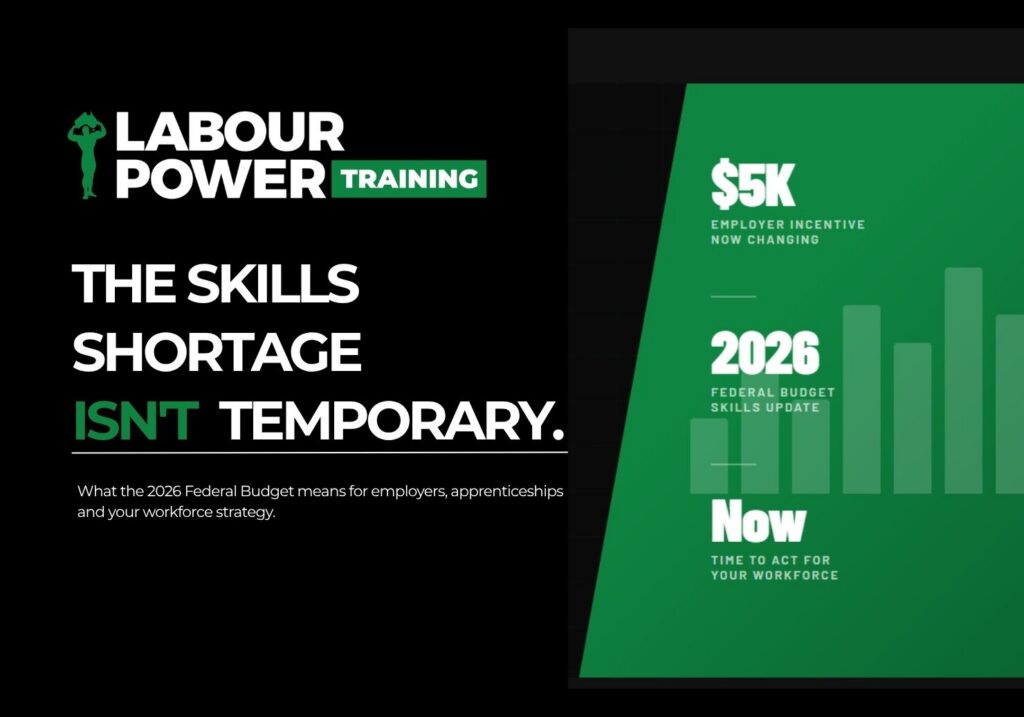
Australia’s workforce shortage problem is no longer temporary. It is structural.
From warehousing and transport through to manufacturing, aged care, construction and logistics, businesses across the country are struggling to secure skilled, reliable and job-ready workers.
Now, following the 2026 Federal Budget, the training and apprenticeship landscape is changing again.
For employers, this creates both opportunity and risk.
While the Government has committed further funding toward skills development, apprenticeship pathways and workforce capability, the incentive system is becoming more targeted, more compliance-driven and far more complex to navigate. 2026-27 Budget
This is exactly why many organisations are now turning to workforce development partners like LP Training to help them navigate the system strategically rather than trying to manage it internally.
The Budget Confirms One Thing: Skills Shortages Are Here to Stay
The 2026 Federal Budget placed heavy focus on:
- housing and infrastructure workforce capability
- clean energy skills
- apprenticeships and traineeships
- migration and trade recognition
- TAFE and vocational pathways
- workforce participation and productivity
The Government announced further investment into skills and workforce initiatives, including:
- expanded support for key apprenticeship programs
- modernisation of trade skills assessments
- targeted funding toward industries facing critical shortages
- ongoing support for vocational education and training systems
At the same time, the Government also confirmed changes to apprenticeship incentives from 1 January 2026.
Importantly, many employer incentives are now being narrowed toward priority occupations tied to housing and clean energy sectors. Apprenticeships Support
For employers outside those categories, support payments in many cases have been reduced.
That means businesses can no longer assume funding will automatically apply.
Apprenticeship Incentives Are Changing
One of the biggest shifts announced is the restructuring of the Australian Apprenticeships Incentive System.
Under the new framework:
- some employer incentives reduce from $5,000 to $2,500
- payments become more targeted to priority occupations
- support is increasingly linked to national workforce priorities
- greater emphasis is being placed on completions and workforce outcomes rather than simply commencements
The new Key Apprenticeship Program will provide:
- up to $5,000 for eligible employers
- up to $10,000 for eligible apprentices
- stronger support for housing and clean energy pathways
However, the challenge for employers is this:
Understanding what applies, who is eligible, what evidence is required and how to structure workforce planning around these changes is becoming significantly more complicated.
The hidden impact on your employer brand
Candidate experience does not end when a role is filled or declined.
Candidates talk. They share their experiences with peers, networks, and online platforms. A poor experience can impact your reputation and make future hiring more difficult.
On the other hand, a strong experience can turn even unsuccessful candidates into advocates for your brand.
Why This Matters for Employers
Many businesses are already stretched operationally.
HR teams are busy.
Operations managers are firefighting.
Supervisors are focused on production targets.
Recruitment teams are trying to fill urgent vacancies quickly.
As a result, training strategy often becomes reactive.
Unfortunately, that creates several risks:
- missed funding opportunities
- non-compliant traineeship structures
- low completion rates
- poor candidate engagement
- increased turnover
- workforce gaps continuing long term
In today’s environment, workforce development can no longer sit separately from workforce planning.
They now need to work together.
That is where having an experienced workforce development partner becomes critical.
Why Employers Need Guidance More Than Ever
The training system in Australia is highly regulated.
Between funding eligibility, state variations, traineeship requirements, apprentice support services, workplace evidence obligations and compliance expectations, many businesses simply do not have the internal resources to manage it effectively.
At the same time, regulators are increasing focus on training quality and genuine workforce outcomes.
This means employers need more than a training provider.
They need a partner that understands:
- workforce capability planning
- operational realities
- compliance requirements
- funding pathways
- retention strategies
- mentoring and completion support
- industry-specific workforce pressures
That is where LP Training adds significant value.
Workforce Development Is No Longer Just “Training”
Modern workforce development is about building operational capability.
The businesses performing best in today’s labour market are not simply advertising more jobs.
They are:
- building internal talent pipelines
- upskilling existing workers
- improving retention through development opportunities
- creating leadership pathways
- reducing reliance on reactive recruitment
- investing in workforce sustainability
This is particularly important across industries experiencing chronic shortages, including:
- transport and logistics
- warehousing
- manufacturing
- food production
- construction
- aged care
- disability services
Government policy is increasingly rewarding employers who take a long-term approach to workforce capability.
The Real Value of a Workforce Development Partner
Many organisations assume training is just about enrolling staff into a course.
In reality, successful workforce development requires:
- workforce analysis
- qualification alignment
- funding advice
- onboarding support
- mentoring
- progress monitoring
- supervisor engagement
- compliance oversight
- completion management
Without this structure, even funded programs can fail to deliver outcomes.
At LP Training, the focus is not just on enrolments.
The focus is on helping employers:
- improve workforce capability
- reduce operational pressure
- increase retention
- strengthen leadership pipelines
- support workforce compliance
- create measurable workforce outcomes
Importantly, LP Training works alongside employers to navigate the complexity of the system so internal teams can remain focused on operations.