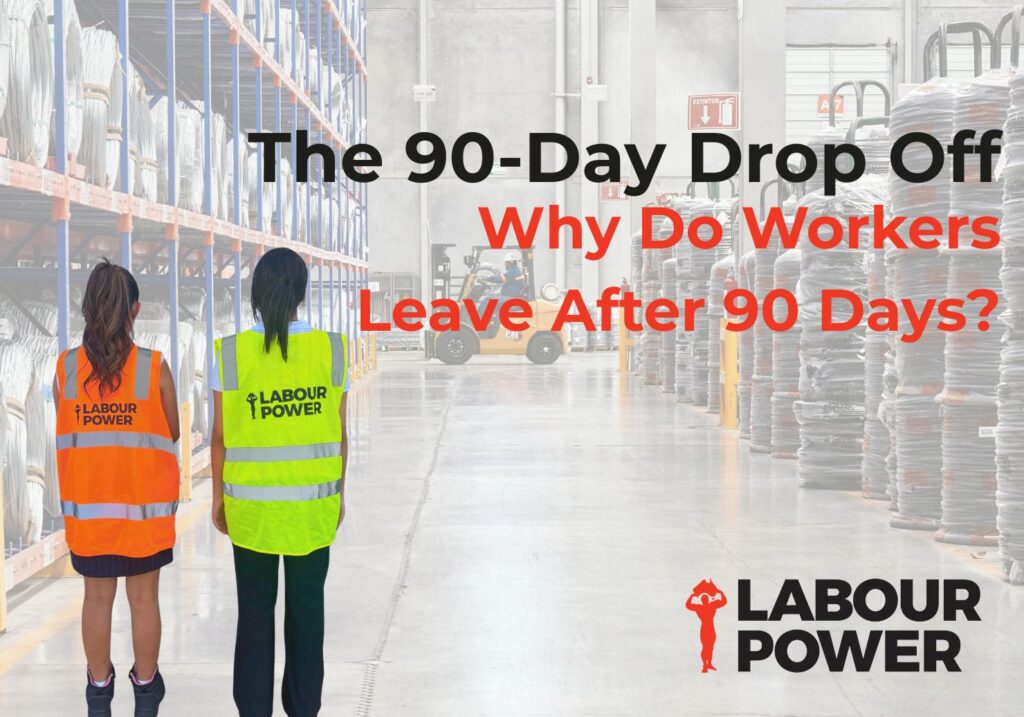
Why Warehouse Workers Leave After 3 Months And What It Means for Your Business
For many warehouse and distribution operations, the 90-day mark has become a critical pressure point. Workers join, get through initial onboarding, and then quietly exit. For employers, this cycle creates constant disruption, rising costs, and inconsistent productivity.
Across Australia, turnover in labour-intensive roles remains high, with many employers replacing staff every 3–6 months. In warehouse environments, this trend is even more pronounced.
1. The Reality of the Role Doesn’t Match Expectations
One of the biggest drivers of early exits is misalignment. Candidates are often attracted by quick-start roles, but once on site, they face repetitive tasks, physical strain, and strict KPIs.
How to combat it:
Clear expectation setting from day one is critical. At Labourpower, we take candidates through detailed pre-start briefings so they understand exactly what the role involves before stepping on site. This reduces early drop-offs and ensures better alignment from the start.
2. Better Offers Are Always Around the Corner
Warehouse workers are in high demand. With competing employers offering slightly higher pay or better shifts, workers are constantly being approached.
How to combat it:
Retention comes down to experience, not just pay. Our Client Experience Managers stay closely connected to both clients and candidates, ensuring workers feel supported, valued, and part of a consistent workforce. Regular check-ins and fast issue resolution help reduce the temptation to leave.
3. Lack of Progression and Engagement
Today’s workforce is looking for more than just a job. Without clear pathways or recognition, disengagement happens quickly.
How to combat it:
We work with clients to identify high-performing workers early and create progression pathways where possible. Whether it’s moving into higher-skilled roles or leadership opportunities, giving workers something to work towards significantly improves retention.
4. Physical and Operational Pressure
Warehouse roles are physically demanding, and high-output environments can lead to fatigue and burnout if not managed well.
How to combat it:
Through regular site visits, safety engagement, and ongoing communication, our team ensures workers remain fit for work and supported on site. Our proactive approach to safety and wellbeing aligns with our philosophy that safety goes 24/7 — and retention improves when workers feel safe and looked after.
What This Means for Employers
High early turnover is not just a recruitment issue, it’s a workforce strategy issue. Constant rehiring impacts productivity, safety, and team morale.
At Labourpower, we go beyond filling roles. With dedicated Client Experience Managers, structured onboarding support, and access to reliable workforce pools, we help clients build teams that not only start but stay.
Because in today’s market, it’s not about how fast you hire.
It’s about how long they stay.
Tara Brown
31/03/2026